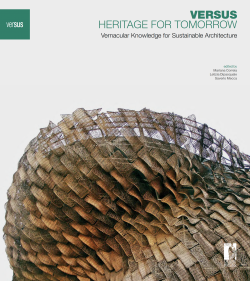
Vernacular architecture represents a great resource that has considerable potential to define principles for sustainable design and contemporary architecture. This publication is the result of an overall aim to produce a valuable tool for analysis regarding vernacular heritage through different assessments, in order to define principles to consider for sustainable development. VERSUS, HERITAGE FOR TOMORROW: Vernacular Knowledge for Sustainable Architecture is the result of a common effort undertaken by the partners ESG | Escola Superior Gallaecia, Portugal, as Project leader; CRAterre | École Nationale Supérieure d’Architecture de Grenoble, France; DIDA | Università degli Studi di Firenze, Italy; DICAAR | Università degli Studi di Cagliari, Italy; and UPV | Universitat Politècnica de València, Spain. This is the final outcome of VerSus, an European project developed from 2012 to 2014, in the framework of the Culture 2007-2013 programme.
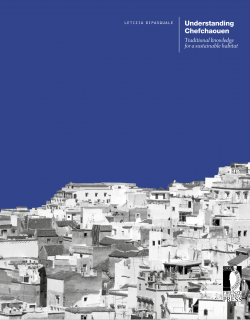
The medina of Chefchaouen represents an architectural heritage of great value and its building culture constitutes a repertoire of knowledge to be safeguarded as an expression of cultural diversity in the relationship between society and nature. The volume presents the results of an in-depth research on the knowledge system that constitutes the local building culture of the medina, highlighting the characteristics of the construction systems, the risks to which the traditional heritage is subject, and its contribution to the development of a sustainable habitat. The book addresses the theme of the built heritage of the medina with an interdisciplinary approach, which includes architecture as part of a system that has to be studied along with the natural, social and cultural contexts.
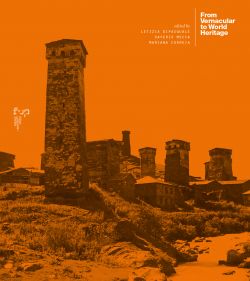
This publication brings together the results of the project 3DPAST: Living and virtual visiting European World Heritage, co-funded by the Creative Europe EU programme. The research highlighted the exceptional character and quality of living in vernacular dwellings found in World Heritage sites. This was possible by seizing the cultural space of European vernacular heritage, located in Pico island (Portugal), Cuenca town (Spain), Pienza (Italy), Old Rauma (Finland), Transylvania (Romania), Berat & Gjirokastra (Albania), Pátmos (Greece), and Upper Svaneti (Georgia).
New digital realities grant the possibility to visit and to appreciate those places, to non-travelling audiences, who lack the opportunity to experience this unique heritage in situ. Creative potential is highlighted in 3D models and digital visualisations, which associate outstanding local knowledge with the vernacular expression of World Herita
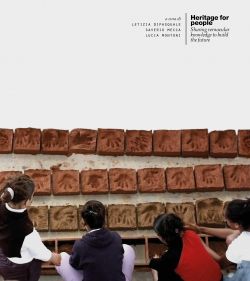
The publication presents the results of the project ‘Versus-Heritage for People’, funded by the Creative Europe EU programme. The main aim of the project was to actively involve a broad audience and raise awareness among it concerning the value of vernacular knowledge in shaping more sustainable and resilient models of development. The material and immaterial elements constituting a vernacular heritage (encompassing local materials, construction methods, models for living and social interaction, technical and environmental knowledge for the management of territories, natural resources, settlements, etc.) have enormous potential for generating forward-thinking models that can improve the environmental and social quality of our habitats, foster a sense of identity and belonging, and relate in a balanced way to the capacities of our planet. The book explores strategies and tools for managing and transmitting knowledge and the values associated with vernacular heritage. It includes concrete examples and good practices for engaging people in processes of knowledge and the enhancement of vernacular heritage values for sustainability. The outcome is the result of the collaborative efforts between the five academic institutions involved in the project – Universitat Politècnica de València as coordinator (ES), University of Florence (IT), University of Cagliari (IT), CRAterre-ENSAG (FR) and Escola Superior Gallaecia at Universidade Portucalense (PT). A total of 63 authors, comprising both external scholars and professionals, contributed to the book.
Architect, PhD in Technology of Architecture and Design, Associate Professor in Production and Management of the Built Environment at DIDA, Department of Architecture, University of Florence. Her academic research is focused on the topics of vernacular architecure, cultural heritage management and sustainable transition.